


Starting a new sharing experience of my mixes to sustain sound exploration ...the program is updated on the events page.
Category: Artistiic
Lifestyle
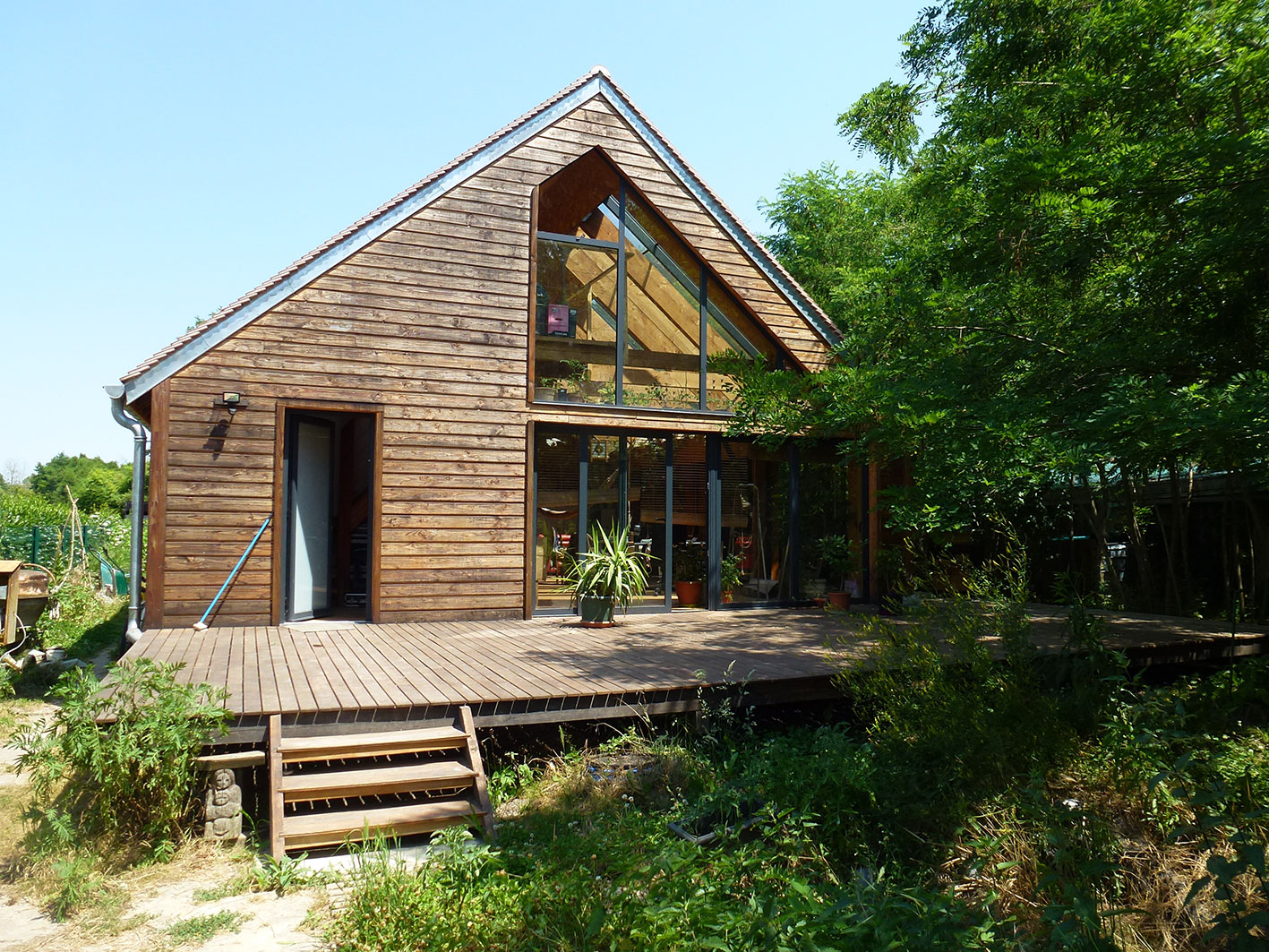
ZiM lives in harmony with nature, He likes to explore grounded settings.
1) Life change & grounding
In his conclusions, Marc Zischka describes the period from 2013 to 2018 as an ‘intensified’ life experience: moving to a new place, a radical change in lifestyle at first, then a gradual evolution whose effects are visible on a daily basis. Daily contact with nature becomes a driving force: observation, research, reading landscapes, and identifying patterns.
2) A ‘learning’ lifestyle
Permaculture is approached as a lifelong learning journey: connecting disciplines, learning by doing, formalising and sharing. This dynamic fuels a spirit of exploration (external: land, projects; internal: emotional, spiritual, “energetic”, listening to the body). It becomes a way of life as much as a method.
3) Coherence between life and music
ZiM turns this lived ecology into artistic material: his mixes are conceived as ecosystems, with diversity, balance and energy flow. Concrete choices (free software, extended machines, open source contributions, renewable energies) reinforce this coherence: music that doesn't just ‘talk’ about ecology, but practises it.
ZIM – Musical Exploration & DJ Identity
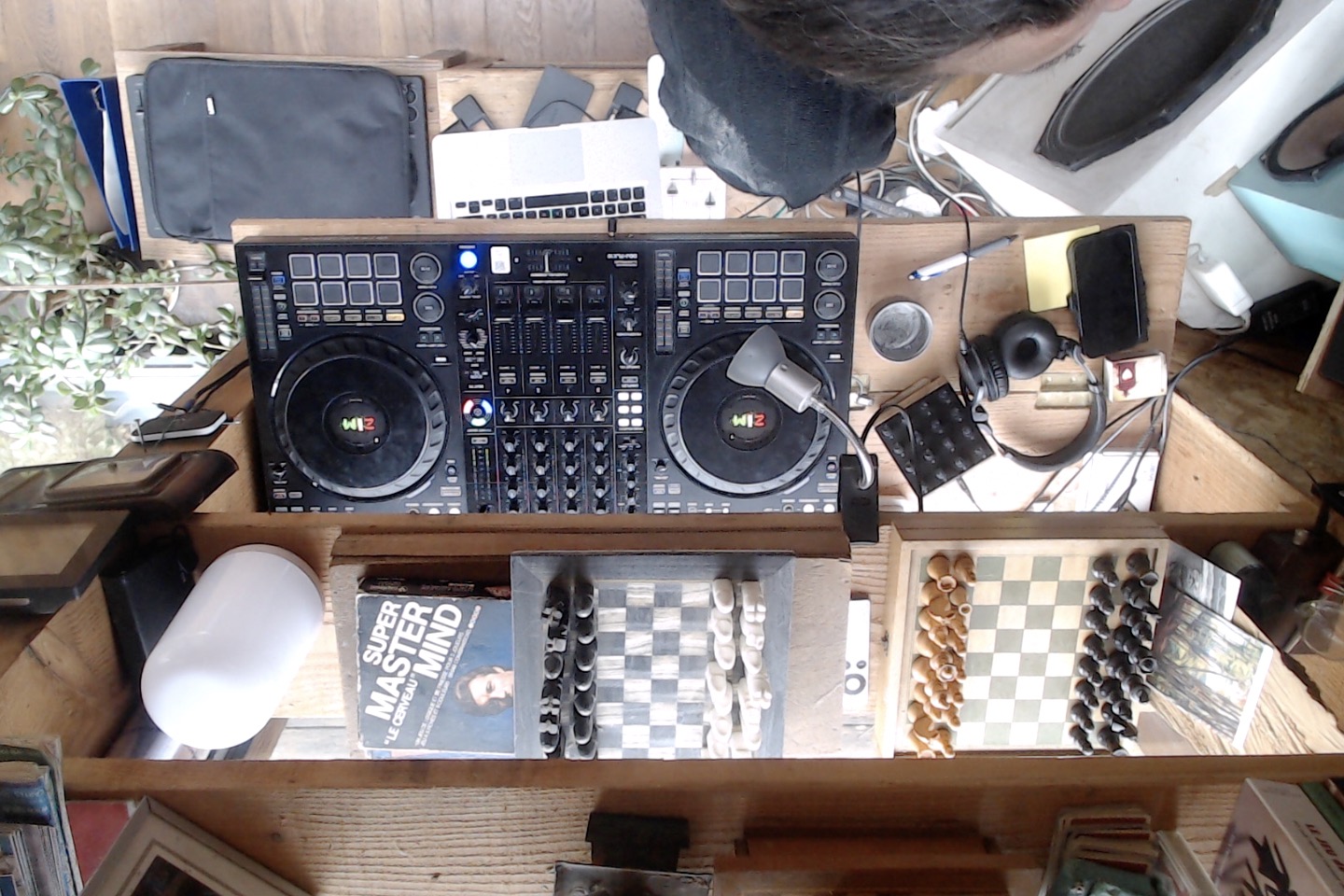
Over time, ZIM’s body of mixes reveals a broad yet coherent musical exploration rooted in rhythm, progression, and long-form flow. The spectrum extends from techno, progressive, trance, and organic electronic forms to funk, disco, reggae, rap, soulful selections, world music, and meditative soundscapes. Despite stylistic diversity, a consistent structural approach connects these sessions.
At the core of this exploration lies an interest in groove as a unifying principle. Whether working with hypnotic techno, organic house, roots reggae, or funk-driven dance sessions, the emphasis remains on continuity, pacing, and internal coherence. Energy develops gradually through layering, repetition, and subtle shifts in density.
In the techno-oriented sets, rhythm functions as architecture. Deep basslines, restrained percussion, and progressive layering create immersive environments designed for sustained movement. Trance and progressive electronic sessions introduce melodic lift while maintaining structural discipline. Organic electronic mixes merge digital production with tribal or natural textures, reinforcing a systemic view of sound as something evolving rather than segmented.
The more eclectic selections—rap, reggae, love-themed compilations, chill and soul sessions—demonstrate another dimension of this exploration: thematic curation. These mixes are often built around emotional or cultural threads rather than tempo or genre alone. The result is narrative continuity shaped by mood, voice, or shared lyrical intention.
Meditative and night-oriented sessions emphasize space, restraint, and tonal balance. They reveal an approach that values atmosphere as much as rhythm. Silence, breathing space, and emotional pacing are treated as structural elements.
Across all these formats, several constants emerge:
- Long-form structure
- Gradual progression
- Smooth, functional transitions
- Emphasis on groove and embodied listening
- Balance between control and intuitive flow
This suggests a DJ identity that resists rigid categorization. ZIM is not confined to a single genre, nor primarily oriented toward technical display. Instead, the practice aligns with the idea of the DJ as a sound explorer and narrative architect.
In functional dance contexts, this approach produces immersive, endurance-based sets. In thematic or emotional sessions, it produces coherent listening journeys. The common thread is systemic thinking: music as an evolving organism where each track contributes to a larger arc.
In conclusion, ZIM can be described as a long-form narrative DJ and sound explorer. The work bridges club-oriented electronic structure and cross-genre cultural curation. Rather than defining identity through style, it is defined through method: progression, balance, and immersive continuity.
ZIM’s profile is therefore that of a groove-centered DJ , who builds sonic journeys grounded in rhythm, coherence, and sustained flow.
My favorite genres
ZiM's musical journey and genres
The first music I ever owned was Jean-Michel Jarre's double album of concerts in China (audio cassette). This first encounter with electronic music was quickly supplanted by the screaming guitars and fast rhythms of hard rock and heavy metal. These genres and their corollaries remained my exclusive taste for quite a few years, then I opened up to rock through Pink Floyd, David Bowie, Supertramp, etc.
Around 1995, I became interested in techno and trance, which was a return to electronic music. This helped open me up to other dance music such as house, then funk, disco and more recently soul. I forgot to mention reggae, which also occupies a significant place in my music library. And also world music… I was particularly interested in Indian music in the 90s, but also Brazilian, African and flamenco music.
So, we've had a quick look at my original music library, which I add to sparingly as I have a collection of over 10,000 tracks. When I add tracks, I obviously have to like them, but they also have to bring something new. If I have something that's just as powerful and similar, I leave it out because I'm not a compulsive collector. I just want to remain open to new things, while being aware that music is an endless ocean.
If you calculate how long it would take you to listen to the 100 million songs available on the largest music platforms, you will find that you would need about ten long lifetimes listening to music 24 hours a day, which is impossible, so more like twenty lifetimes, and since we cannot spend our whole lives listening to music because we go to school, work, etc., So by devoting your life to music in an intense way, you will at best listen to 2% of what exists, in which case you won't be able to listen to the tracks you particularly like again, since you have to go through the entire catalogue!
This profusion may be problematic, but in reality, it is also an opportunity, if this abundance is well managed. There are styles such as RnB and modern rap that I am less comfortable with. At most, I might listen to a few good old-school rap tracks, but I wouldn't spend an entire evening listening to rap. What strikes me about many current productions is the uniformity within the infinite diversity.
Exploring Soundscapes with ZIM
Exploring Soundscapes:ZIM DJ Mixes
Discovering ZiM’s Approach to DJing
Marc Zischka, aka ZIM, is not just a DJ; he is a sound explorer based in the forest of Fontainebleau, in France. His mixes are inspired by natural landscapes and include organic rhythms, fusion of genres. Including various global musical cultures Zim invites you to an immersive experience.
The Narrative Journey of DJ Mixes
For ZiM, DJing is more than just playing music; it’s about crafting a narrative journey. Each mix is created meticulously to guide listeners through an immersive soundscape. The process includes:
- Curated Selections: Every track is chosen for its emotional and energetic contribution to the mix.
- Fluid Transitions: Smooth shifts between tracks maintain the listener's immersion and enhance the storytelling aspect of the mix.
- Long-Form Progression: ZIM's mixes build gradually, taking the listener from subtle, introspective sounds to invigorating dance beats.
Emphasizing Balance and Diversity
ZIM embraces systemic thinking, closely tied to permaculture principles. This way of thinking translates to his DJ sets in several ways:
- Balance: Instead of overwhelming the audience with spectacle, each mix is designed to create harmony between different musical elements.
- Diversity: Incorporating various genres and cultural influences ensures a rich audio experience that appeals to a wide range of listeners.
- Natural Flow: ZIM’s mixes evolve organically, allowing the energy to rise and fall naturally without jarring interruptions.
Breathe and Evolve: The Listening Experience
Listeners are encouraged to engage with ZIM’s music on different levels:
- Focused Listening: Each mix invites an attentive hearing where details and nuances can be discovered.
- Embodied Movement: The rhythmic grooves urge listeners to dance, creating a physical connection to the music.
Conclusion
ZIM’s approach to DJing is a refreshing take on how electronic music can be intertwined with the rhythms of nature and cultural influences. His mixes value balance, diversity, and natural evolution. ZIM invites listeners not only to enjoy music but to fully immerse in the experience.
The start
How did I come up with the idea of exploring DJing?
I had probably always been attracted to, or rather had a knack for, technical matters because of my initial studies, namely a university degree in electrical engineering and industrial IT, specialising in automation and systems. Those two years of study gave me a comprehensive understanding of electronic and digital systems from the 1990s onwards.
Then, after studying business and taking a sabbatical year to travel, followed by a few unsuccessful salaried jobs, I became an entrepreneur for nearly 30 years in the fields of training and consulting. I started out in management, leadership, efficiency and professionalism, then incorporated the dimension of sustainable development and CSR, finally evolving towards permaculture. These three stages correspond to the three names of my company, namely More Balls Than Most, Ecologik Business and Semis Sauvages.
The ecological discourse has become quite inaudible since 2020: this has reduced my activities, and for a few years I made up for this loss of income with various jobs: gardening, woodcutting, construction work.
In July 2024, following the death of my father, family disagreements arose. I also experienced a sudden break-up a few months later. Emotionally scarred, I undertook personal work with the aim of maintaining my mental health and rediscovering my joy. In July 2025, the idea of becoming a DJ took hold.
I had been collecting music for a very long time. Having chosen not to have a television at home, I spent entire evenings searching for music, listening to it and sorting it. I even mixed it with two iPods and a small iRigs mixer.
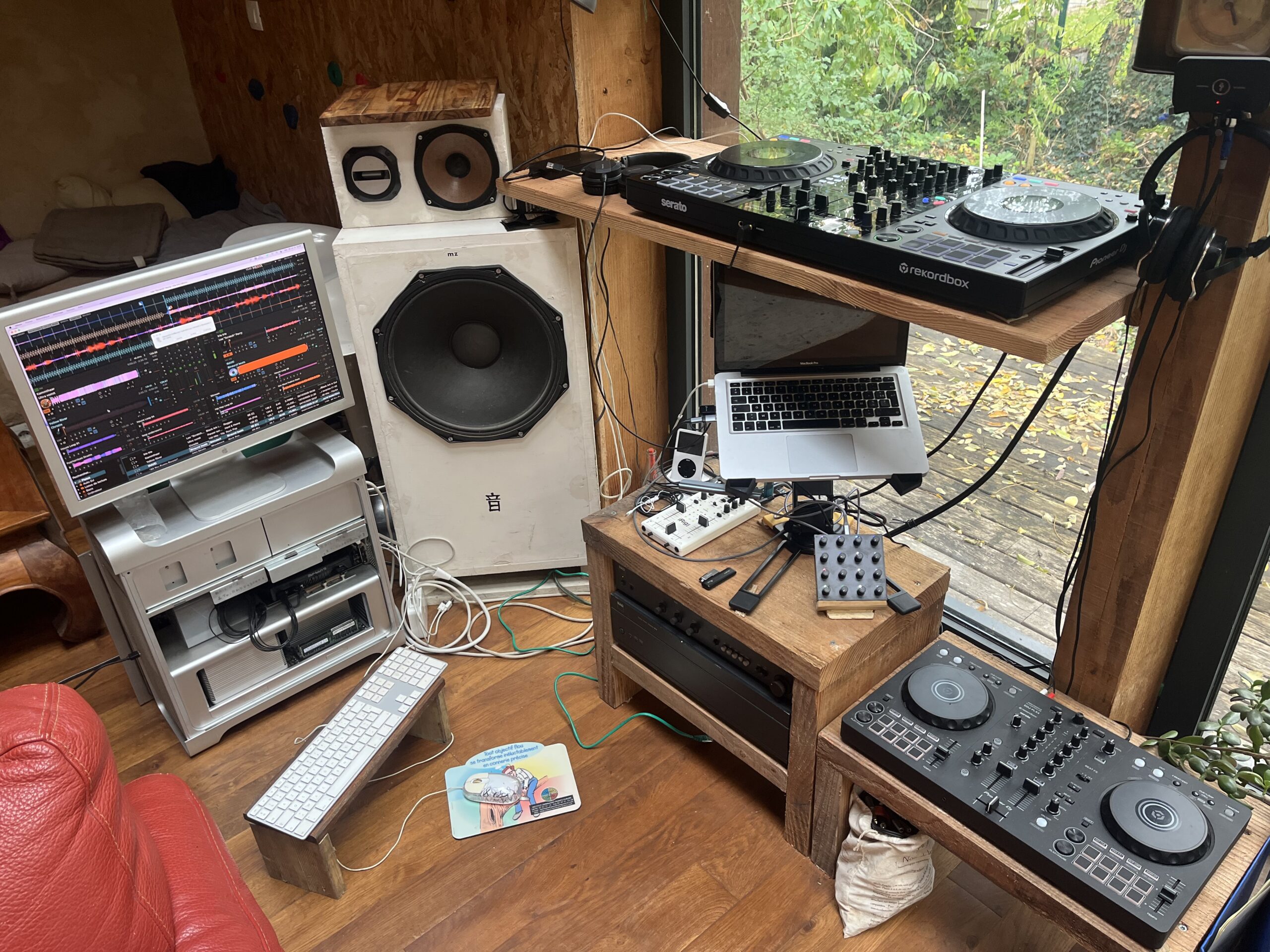
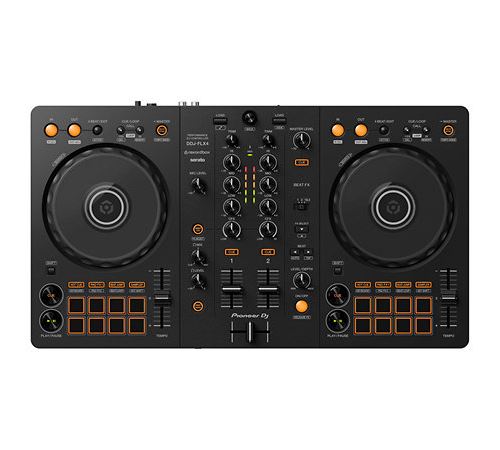
So I already had a nice music collection. I had a good general knowledge of computers. I invested in a Pioneer DDJ FLX4 controller, and I had already used Mixxx a little bit as part of my research on open source software. So I went back to this software, which has a mapping for this controller.
I forgot to mention the good hi-fi system I've had for 25 years, consisting of homemade speakers and an NAD amplifier + preamplifier. I might write a specific article about that. In any case, it sounds great!
A few years ago, I designed and built a small solar-powered sound system that I use in remote areas of my property. Two good bases for playing indoors and outdoors
Hello world, I’m ZiM, sound exploring DJ !
Welcome to WordPress. This is your first post. Edit or delete it, then start writing!