


Category: Tech
Low Energy Impact

ZiM values sobriety, autonomy, coherence
1) Energy viewed as a system
Permaculture, as practised and taught by ZiM, takes a holistic approach: think globally, act locally, and design resilient systems tailored to actual needs. This logic also applies to energy: first reduce demand (sobriety), then cover what remains with renewable and sustainable solutions.
2) Towards concrete energy autonomy
In his thesis, Marc Zischka explicitly links autonomy and technical choices: the goal is to be ‘practically energy independent’ through a combination of passive solar, wood, solar thermal and photovoltaic energy. Self-build, wild living and local energy production are key elements of this trajectory.
3) Responsible DJing = energy + digital sobriety
The choice of Mixxx (open source) and the use of older computers fits into this same logic: reducing the footprint (hardware and software), moving away from forced renewal, and favouring repairability/adaptability.
The use of 100% renewable energy and a solar sound system ensures energy consistency and is part of the artistic identity.
Controller Mapping
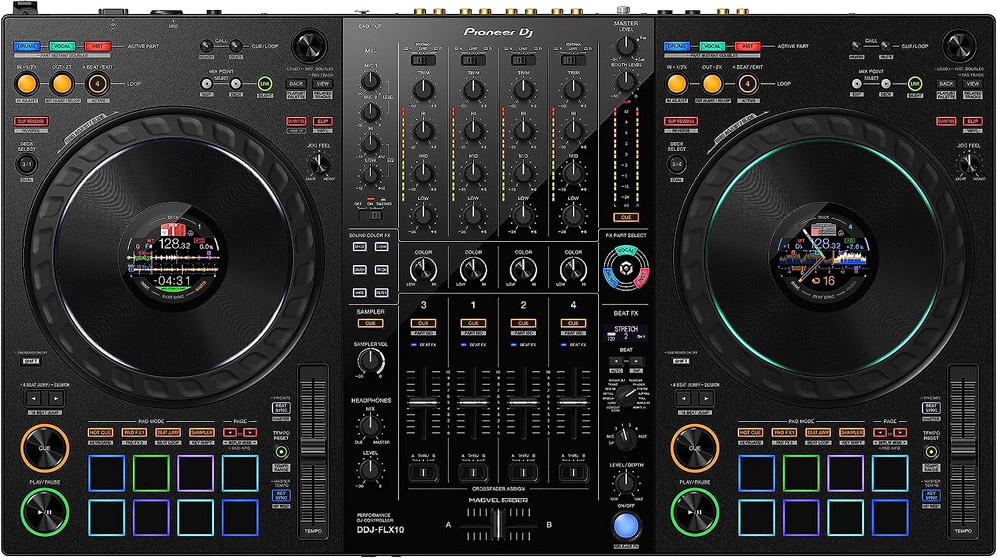
Open source contribution: DDJ‑FLX10 mapping for Mixxx
Beyond choosing Mixxx (free software), ZiM participates in the ecosystem: when he switched from the DDJ‑FLX4 controller to the DDJ‑FLX10, he found that there was no ready-to-use mapping for using this controller with Mixxx. So he started adapting a DDJ‑1000 mapping to create a first working version that provided access to the essential controls (faders, buttons, encoders, etc.), and published it so that other DJs could use it.
This mapping, programmed in xml and javascript, is deliberately designed as an evolving base: the DDJ-FLX10 offers many possibilities, and ZiM invites the community to test it, provide feedback and contribute to gradually transforming this duo (DDJ-FLX10 + Mixxx) into a ‘magic duo’. The code and files are shared on GitHub, allowing users to track improvements, suggest corrections and distribute successive versions.
GitHub repo:
https://github.com/marco-zis/Mixxx-mapping-for-DDJ-FLX10
Low Tech DJing

Old, upgraded equipment: a low-tech approach for sustainable sets
My recordings were made on computers that are around 15 years old, using Mixxx. This is no coincidence: ecology is at the heart of my artistic approach. So, instead of chasing after the latest machine, I chose to make what I already have last longer — and optimise it.
1) Why choose old equipment?
- To reduce the ‘invisible’ footprint:
The manufacture of a computer (metal extraction, transport, assembly) has a very heavy impact. Extending the life of existing Macs means avoiding a significant part of this footprint. - Practising the ‘right to repair’:
A reliable DJ setup is not necessarily new: it is a familiar, mastered, well-maintained setup. Replacing a hard drive with an SSD, increasing RAM, cleaning, reapplying thermal paste—these are concrete acts of sobriety. - Gain resilience:
A ‘simple’, stable computer that is rarely updated and does not depend on cloud services can become more predictable when used live. And on stage, predictability is crucial.
2) Mac Pro 2010: the tower as a sustainable ‘tool’
The Mac Pro 2010 (tower) embodies a modular approach: it can be maintained, upgraded, parts replaced, and storage optimised.
From a responsible standpoint, the most useful upgrade is not ‘power for power's sake’, but reliability:
- SSD to speed up loading and responsiveness.
- Sufficient RAM for stability (library, analysis, effects, recording).
- Maintenance (dusting, ventilation, cables) to reduce heat and noise.
- Organisation of backups (library, playlists, exports): true sustainability also means data sustainability.
3) MacBook Pro 2011 + OpenCore Legacy Patcher: extend instead of discard
Old Intel Macs are often ‘abandoned’ by Apple in terms of official compatibility, even though they are still capable of many artistic uses. OpenCore Legacy Patcher (OCLP) allows you to install recent versions of macOS on certain Intel Macs that are not officially supported, extending their lifespan.
This choice has a very ‘permaculture’ aspect to it: we observe, we adapt, we reuse, we make and do with what we have.
A few important (responsible and pragmatic) points:
- Check model compatibility:
OCLP only works on Intel Macs, and compatibility depends on the models listed by the project. - Keep a cool head:
‘Installing the latest version’ does not work miracles: some features may be limited depending on the hardware, and you have to accept a degree of experimentation. - Secure:
Make a full backup beforehand, be cautious about updates, and ideally have a plan B (a second disk/partition/boot key).
4) An aesthetic of simplicity
Ultimately, this technical choice says something: a way of being a DJ that does not separate ‘sound’ from ‘the world’. Making people dance, yes — but in line with a vision: repairing, prolonging, sharing, circulating energy (human and electrical) rather than wasting it.
This simplicity is not a constraint: it is a creative framework. A simpler, more sustainable setup also means more mental space for what matters most: selection, narrative, listening, intensity.
Open-Source software and DJing
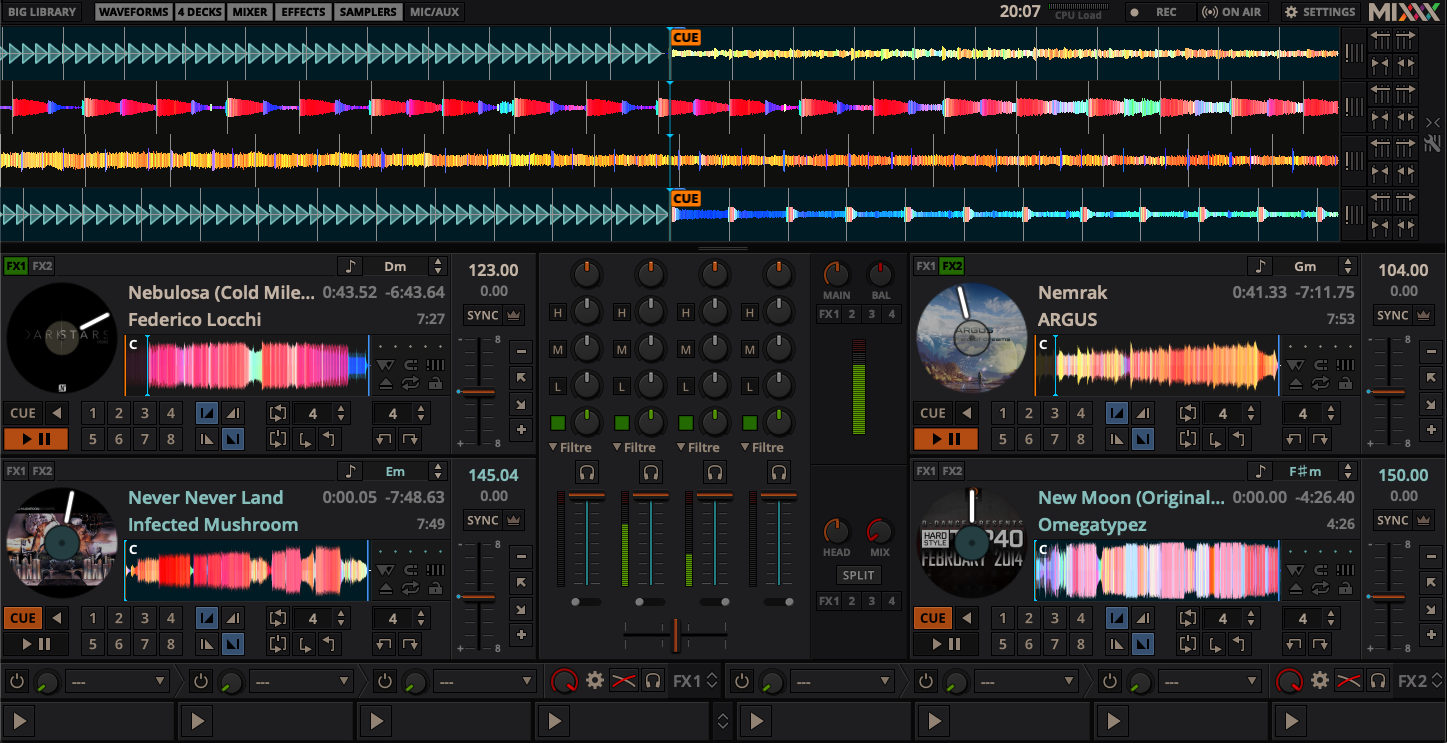
Responsible DJing: why I chose Mixxx (free software)
My name is Marc Zischka (ZiM). I create mixes like journeys: a progression of moods, fluid transitions, organic textures, electronic and world influences, to guide the listener from meditative calm to dancing intensity. My playground is as much musical as it is systemic: I try to circulate energy with balance and diversity, as one would design an ecosystem.
In this approach, ecology is not a ‘plus’: it is part of the artistic project. And it starts with the tools. Out of ecological commitment, and with the idea of responsible DJing in mind, I chose Mixxx: free and open source software.
1) Open source/free software: the ethical argument
People often confuse ‘free’ with ‘open source’. Free software is defined primarily by freedoms: the freedom to use it for any purpose, to study how it works, to modify it, and to share copies (including modified ones). These freedoms give users real power: control, autonomy, and transmission.
Open source emphasises licensing and distribution criteria: access to source code, permitted redistribution, the ability to create derivative versions, etc. The central idea in both approaches is transparency and the ability to act: I am not just a ‘customer of a tool’; I can understand, adapt, share, and make it last.
Why is this important, ethically, compared to proprietary software?
- Governance and power: proprietary software depends on a company and its decisions (pricing, subscriptions, removed features, discontinued compatibility). With free software, the code is public and continuity can be ensured by the community: the tool is not captive to a single player.
- Sovereignty and sustainability: access to the code allows for maintenance, correction, and adaptation over time. It is a ‘repairable’ rather than ‘disposable’ approach. It naturally fits in with a policy of moderation and extending the life of equipment.
- Ethics of sharing: free software encourages mutual aid. Pooling resources and sharing expertise. In artistic practice, this means recognising that we rely on a community and contributing to it (bug reports, translations, controller mappings, donations, etc.).
- Respect for the user: no structural dependence on a platform, store, account, or artificial limitation. On stage, it matters: a tool should serve the music, not impose an economic model.
2) Mixxx: concrete and consistent advantages
Mixxx is open source, community-driven DJ software released under the GPLv2 licence. There is no ‘company behind it’: it is DJs and developers who keep it alive, which guarantees a logic of general interest rather than a logic of lock-in.
In practice, Mixxx has advantages that are consistent with responsible DJing:
- No subscription, no paywall to exist:
Mixxx can be used without a subscription, and the basic tool is not subject to a monthly fee. This allows for alternative budgeting (music, speakers, training, repairs, transport, etc.).
Anti-vendor lock-in logic:
Mixxx prides itself on working well with a wide range of hardware and without artificial restrictions. It offers MIDI/HID support, mappings, and a programmable mapping mechanism (JavaScript) to precisely adapt your controller to your playing style. - DVS / ‘free’ timecode:
Mixxx offers vinyl/CD timecode control and claims to be the only free timecode vinyl control software for Windows, macOS, and Linux. For a ‘low-tech + vinyl feel’ approach, it's a cornerstone. - Library continuity:
Mixxx can read local libraries from other DJ ecosystems (including Rekordbox and Serato). This is very useful if you want to avoid ‘starting from scratch’ or if you need to import/export depending on the scene. - Broadcasting and archiving tools:
Mixxx integrates recording (WAV/FLAC/Ogg, MP3 via separate library) and live streaming (Icecast/Shoutcast). For artists, this means they can publish independently without relying on a proprietary workflow. - Open formats and longevity:
Mixxx supports many audio formats (FLAC/WAV/AIFF, MP3, M4A/AAC, Ogg, Opus). This choice is also ethical: formats that are durable, documented, and interoperable.
3) Mixxx vs Rekordbox / Serato (from a ‘responsible’ perspective)
Rekordbox and Serato are excellent tools that are widely used in the industry. However, their model is primarily proprietary: advanced use often requires subscriptions, licences, and/or ‘unlocking’ hardware.
- Rekordbox:
Rekordbox offers a free plan and paid plans (subscriptions) with advanced features (e.g. DVS, effects, cloud features, etc.). There is also a ‘Hardware Unlock’ feature (certain hardware unlocks features). - Serato:
Serato offers Serato DJ Lite (free) and Serato DJ Pro (monthly subscription or purchase), as well as bundles (Suite) including extensions (DVS, Pitch 'n Time, Video, etc.). Serato also states that to use certain controllers with Serato DJ Pro, you must purchase a licence.
From an ethical point of view, the difference is not ‘which is better musically’, but ‘who retains control’:
- Economic dependence: if the price, conditions, or segmentation of functions changes, your setup changes. Open source reduces this dependence.
- Hardware dependency: when an ecosystem is closely tied to a brand or range, it can encourage more frequent upgrades. Mixxx, by focusing on interoperability and mapping, promotes hybrid setups and reuse.
- Dependency on an industrial strategy: a proprietary tool may cease to support an OS, legacy hardware or functions. With open source, the community can (often) extend, maintain and adapt.
Conclusion: choosing a tool = choosing a world
Choosing Mixxx is not ‘just’ choosing a piece of software. It is choosing a philosophy: autonomy, transparency, sharing, sustainability. In my world, where ecology is at the heart of the artistic process, responsible DJing starts there: tools that are consistent with the intention.